The easiest way to make
life's hardest decisions.
My Way Cards©
20 years of helping people make difficult decisions, now used together with:
MyVoiceLivingWill™
Judge the suffering each condition in My Way Cards© causes by recording your own voice.
The Mission of Caring Advocates
For over 25 years, our mission is to help reduce your, and your loved ones' suffering — especially if faced with the many challenges of living in late-stage dementia.
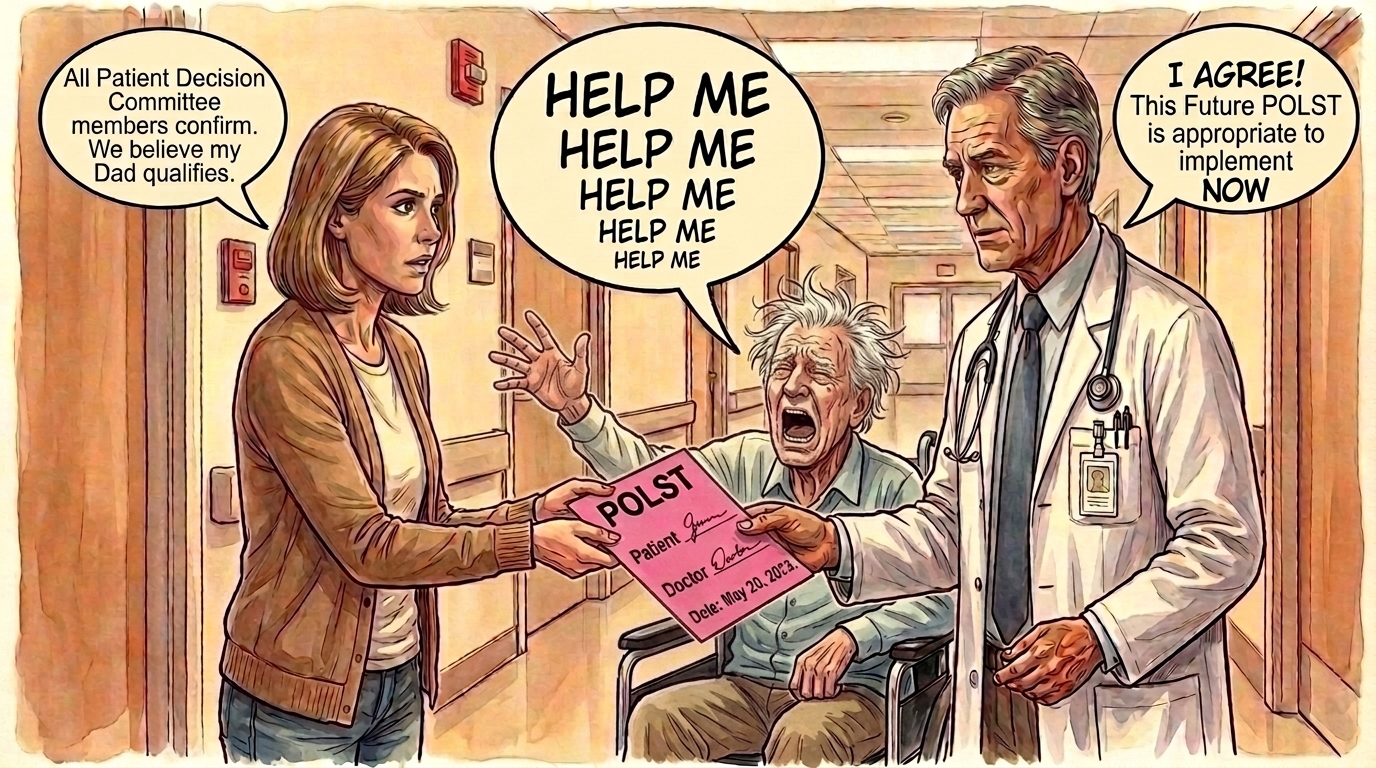
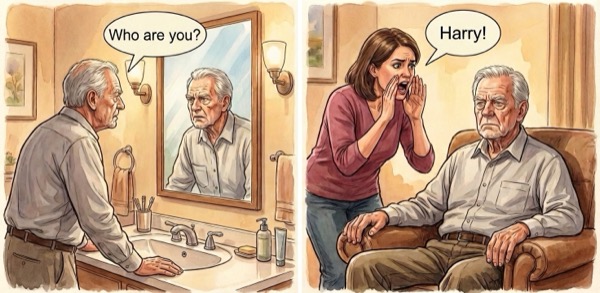
While he had capacity, Harry formed his Patient Decision Committee. Its members can meet when treatment decisions must be made. They can confirm he has reached a condition(s) that qualifies him for a different completed “Future POLST.” If his treating physician agrees, Harry’s suffering (and his family’s) can finally end by making a decision about which all can have confidence.
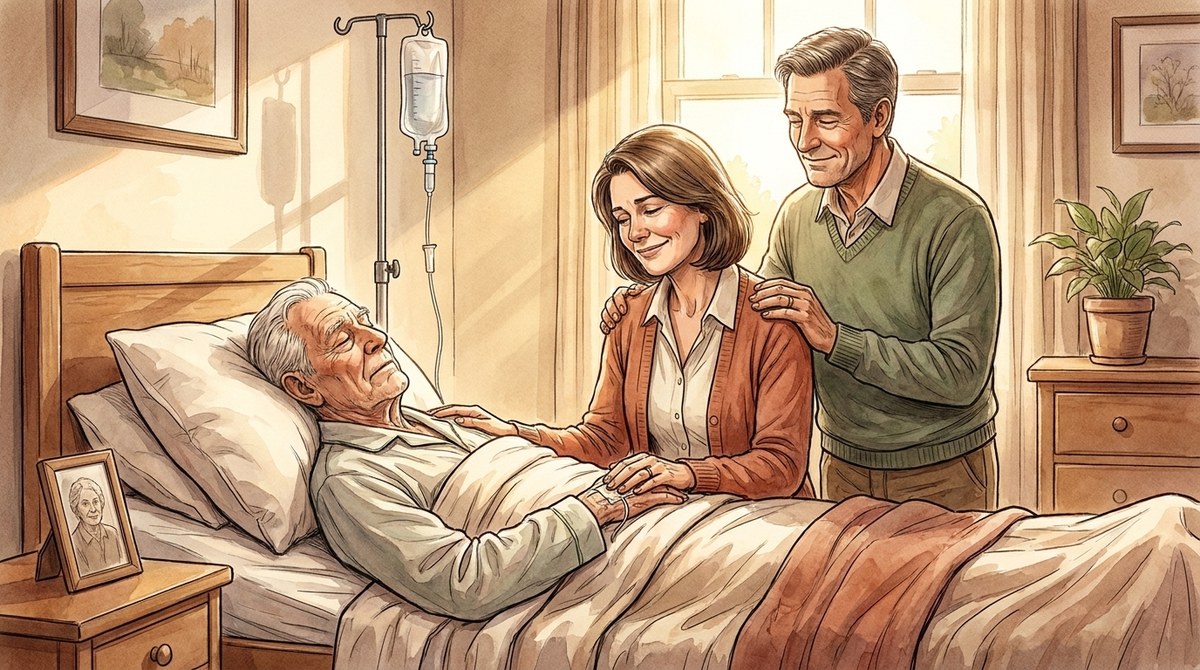
Caring Advocates’ definition of success: Your physician implements the treatment of last resort you decided you would want if you reached a condition that you previously judged would cause severe, intolerable, or unbearable suffering. In contrast, other living wills have a much lower level goal: to help you express what treatment you would want for any amount of suffering. Even more important, Strategic Advance Care Planning protocol is designed to motivate others to act so you get what you want. And, it’s easy to start using MyVoiceLivingWill.™
What's ultimately at stake is how much and how long you and your loved ones must suffer.
Now you can record your wishes in your own voice — while you still can — so that if someday you can no longer speak for yourself, your doctors and loved ones can:
- Listen to your voice state exactly what treatment you would want.
- Understand why — your lifelong values, past experiences, and treatment preferences.
- Respond effectively when relief from suffering requires controversial treatments of last resort — which is why advance care planning is so challenging for advanced dementia.
Adding MyVoiceLivingWill to My Way Cards makes it easy to complete the foundation of Strategic Advance Care Planning that has been in development over 20 years and is designed to convince those in power to honor your end-of-life wishes.
Why this matters now
The lifetime risk of dementia after age 55 is 42%. If you are female, Black, or carry one copy of the APOE ε4 gene, your risk rises to 44%–48%.1
Plan now — while your mind still works well.
1 Fang M, Hu J, Weiss J, Knopman DS, Albert M, Windham BG, et al. Lifetime risk and projected burden of dementia. Nat Med. 2025 Mar;31(3):772–776. doi:10.1038/s41591-024-03340-9
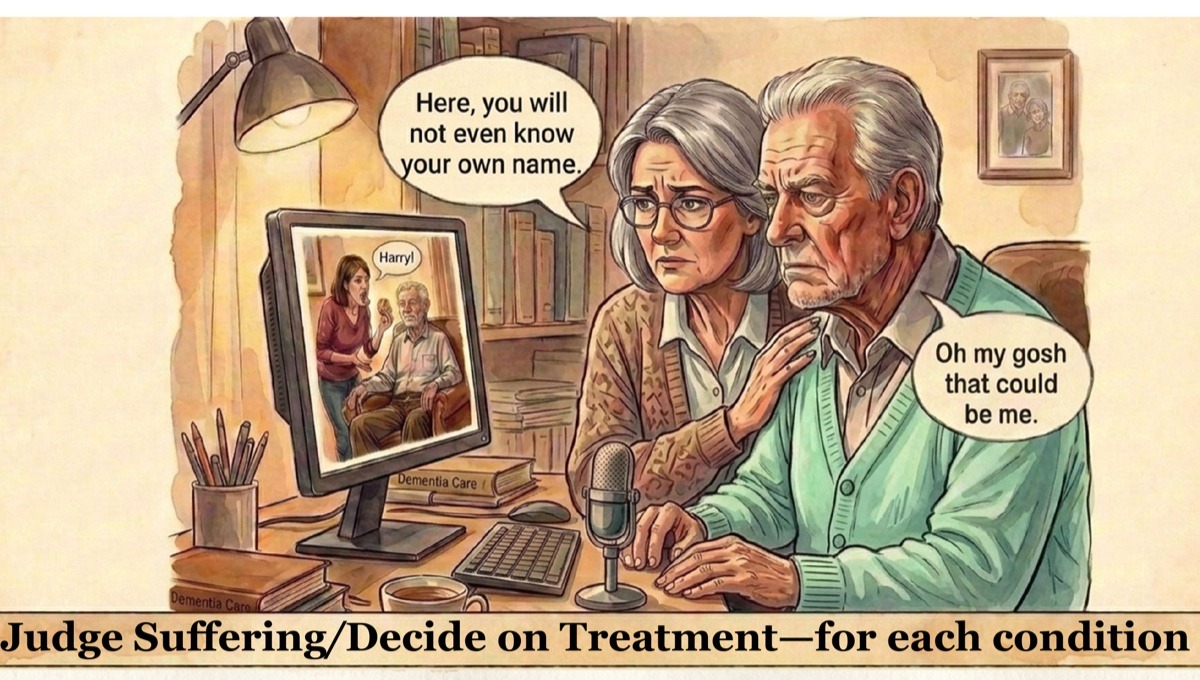
"Oh my gosh — that could be me."
36 illustrated conditions that commonly cause suffering in late-stage dementia and other terminal illnesses. Simply judge how much suffering each would cause — or decide on the treatment you'd want.
Where do you start?
Two paths, depending on whose end-of-life care you are planning for.
My Way Cards© · MyVoiceLivingWill™
For adults planning their own end-of-life care while their mind still works well. Judge the suffering each of 36 conditions would cause — or decide on the treatment you'd want — and record your wishes in your own voice.
Start the Free Trial →NOW Care Planning
Caring for a parent who is already living with advanced dementia? If your parent can no longer speak for themselves, but you believe they would not want their current suffering to continue, NOW Care Planning offers a different path forward. Dr. Terman consults directly with families in this situation.
Contact Dr. Terman →For Quebec residents — and other Canadians
A version of this program — "MAiD or Natural Dying" My Way Cards — helps you complete your Advance MAiD Request with a physician or specialized nurse practitioner, under Quebec's Bill 11. Residents of Canadian provinces other than Quebec may complete this living will now. That way, their wishes will be documented if — in the future — Advance MAiD Requests become legal where they live. Meanwhile, this treatment can be legally offered for unbearable suffering: Rapid Sedation to Unconsciousness.
- Definitions:
- "Natural Dying"
- is following these two physician orders: "Cease assisted feeding/hydrating," and, "Always place food and fluid within patient’s reach."
- "Moderate Anesthesia"
- is using palliative sedation to relieve suffering by slowly increasing the minimal dose of medications that can relieve suffering (if other methods have been tried but failed) while trying to preserve consciousness if possible.
- "Rapid Sedation to Unconsciousness"
- is quickly increasing the dose of sedatives to levels high enough to relieve URGENT, UNBEARABLE suffering.
- "MAiD"
- is Medical Aid/Assistance in Dying.
Try the Free Trial
— no obligation —
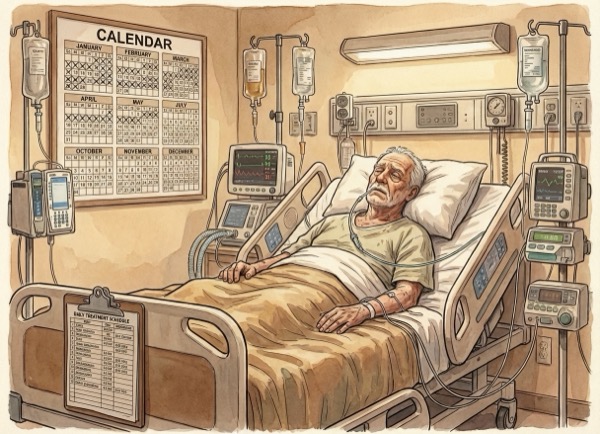
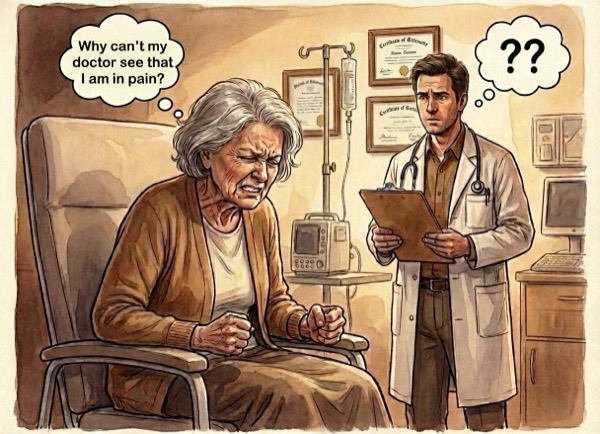
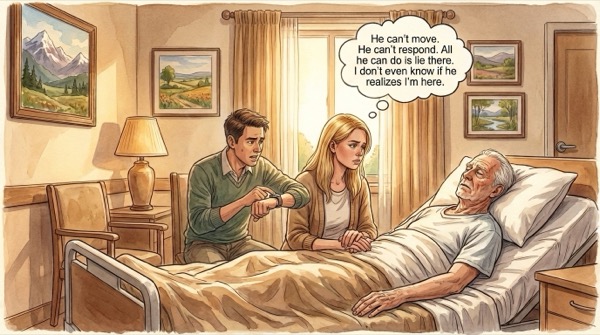
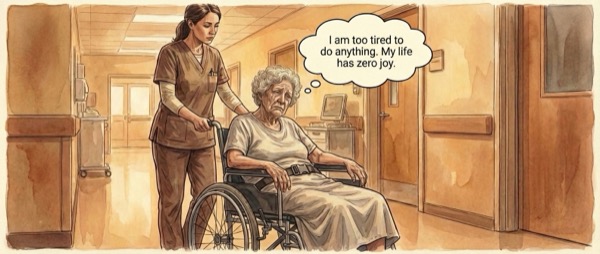
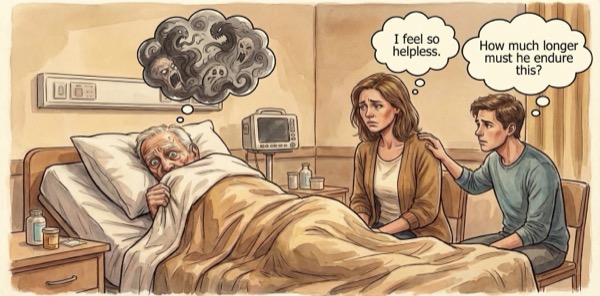
Here are the 9 conditions you will consider in the Free Trial.


Get your personalized 9-item Living Will
When you complete the Free Trial, we'll send you a personalized 9-item Natural Dying Living Will with your name and birth date — yours to keep, share, or hand to your physician.
Use the ANCHOR SCALE you prefer — to rate how much suffering each condition would cause.
My Way Cards uses a Dual-Anchor Rating Scale that lets you rate either the intensity of suffering each condition would cause you (Judge Intensity of Suffering — JIS), or the treatment you would want (Decide On Treatment Type — DOTT). You will use one of three versions, depending on your situation.
The same scale you'll see on the cards.
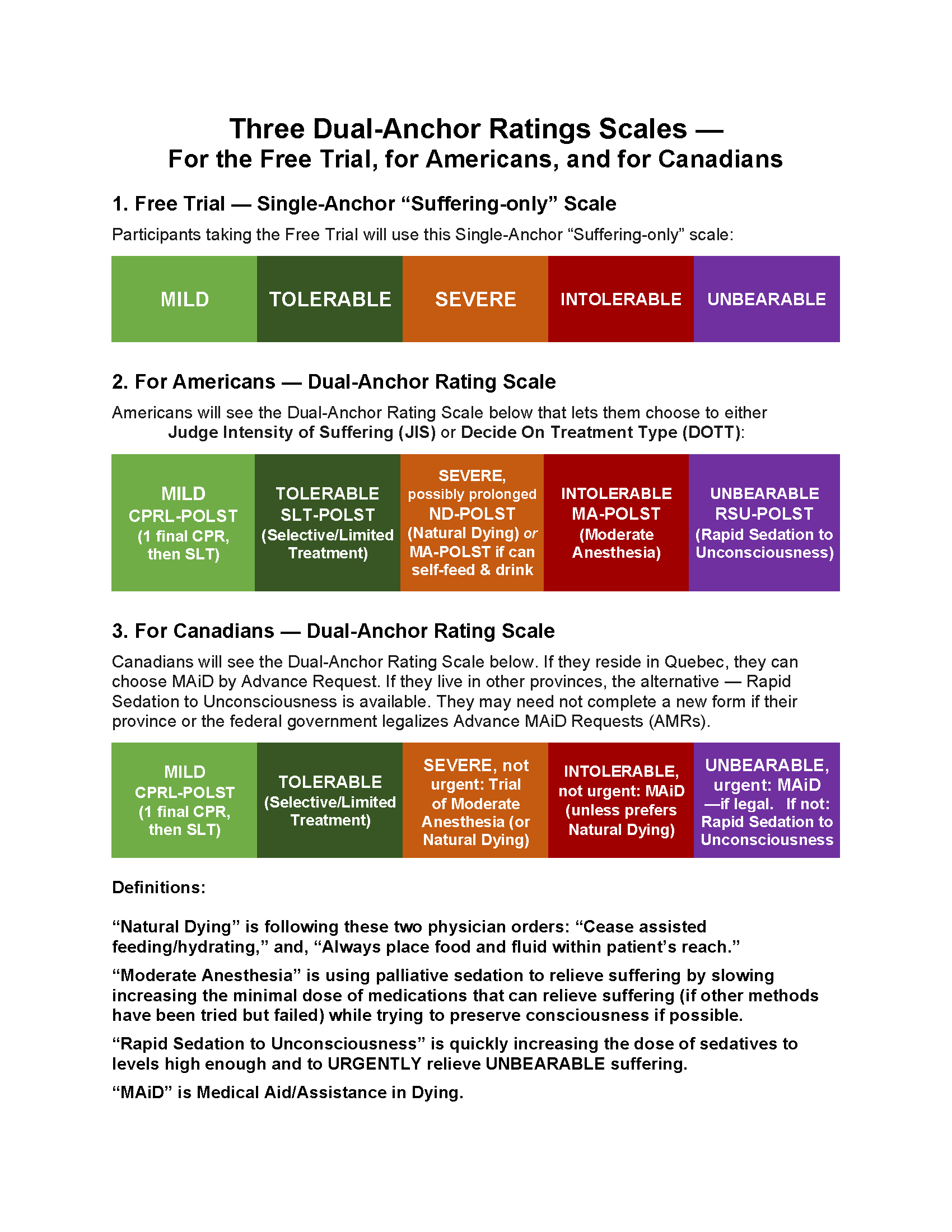
Quebec residents can choose MAiD by Advance Request under Bill 11. Residents of other provinces may use this scale now — no new form needed when Advance MAiD Requests become legal there.
Choose Which Way You Want to Begin My Way Cards
Which is your primary interest?
I'm planning for myself
"I want to prevent how much and how long I and my loved ones suffer."
Consider 36 illustrated conditions to create a living will so personal that it reflects your values, so specific that it can avoid most conflicts, and so grounded in medical practice, law, and bioethics that your physician will honor it.
Contact us about completing all 36 My Way CardsI'm caring for a close relative
"How can I and others who are close and really know what our relative would want now — convince her doctors to give her the controversial treatment she needs — even though s/he never wrote anything down?"
MyVoiceLivingWill™ can record every one's "substituted judgments" — what each of you are sure your relative would have wanted for each of the 36 conditions of the My Way Cards. Polling and discussions are the foundation of the "NOW Care Planning" program. Click here for more information.
Contact us about forming an effective Patient Decision CommitteeI'm a healthcare professional
"Competent clinical professionals in Quebec report needing 2 to 3 sessions, each of which lasts 1.5 to 2 hours, to create advance requests for Medical Aid in Dying."2
Using My Way Cards with MyVoiceLivingWill™ can:
- Reduce the time of advance care planning counselors
- Increase future treating physicians' knowledge about patients' values
- Enhance confidence that suffering is INTOLERABLE in deciding "WHEN" to implement MAiD — or a treatment of last resort such as ceasing assisted feeding/hydration, moderate anesthesia, or rapid sedation to unconsciousness — depending on the intensity of suffering.
2 Dr. Georges L'Espérance. April 16, 2025. https://www.youtube.com/watch?v=M9jaJrZ4SMc
View clinical resources"My Way Cards" are superior to other living wills for three reasons:

Prevents premature dying
Only My Way Cards consider your potential for remaining joy — to protect you from automatic physician orders that could end your life prematurely, before you'd actually want.
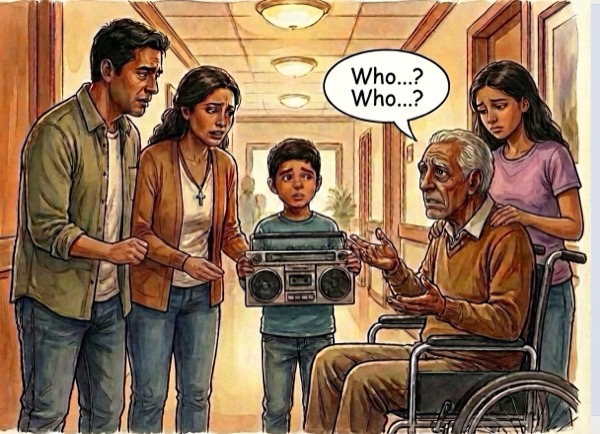
Condition 9 shows a patient who no longer recognizes family — but sings along as others dance to his favorite music. A simplistic living will that only generally states: "If I can't recognize my loved ones" could end his life while he can still enjoy living. My Way Cards focus on suffering: you only need to state whether a condition would cause mild, tolerable, severe, intolerable, or unbearable suffering and WHY (by explaining your values) to complete a living will that will succeed. Use My Way Cards to be specific so that your dying can be timely — neither premature nor prolonged.

The most comprehensive descriptions of suffering.
Not only are 36 conditions more than in any other living will; but My Way Cards also reveal Non-Observable Suffering (N-O-S) — the burden your illness places on your family, the tarnished memories you'll leave behind, and your inner feelings due to loss of identity, dignity, and relationships.
No ordinary brain scan can detect how much pain you are experiencing or how lonely, depressed, bored, confused, or scared you feel. My Way Cards is the only system that captures these dimensions because it asks you to judge, while you still can. My Way Cards images are unique. They reveal patients' emotions by detailed facial expression. They reveal what's going on by bubbles that show spoken words. And they show what people are feeling by bubbles with the words they are thinking.
Only My Way Cards give you a voice about Non-Observable Suffering (N-O-S) — the inner turmoil your doctor cannot see and therefore won't treat — so no one ever says "S/he's not suffering; s/he's just sitting there." You need treatment when your body is withdrawn but your mind is in anguish. Physicians and staff should not ignore or dismiss you. Your family or proxy/agent can always check your living will to see if you may have N-O-S and then bring this possibility to the attention of your treating physician/provider.
Terman SA, Steinberg KE, Hinerman N. Timely dying in dementia. Alzheimers Dement (Amst) 2024;16(1):e12527 · DOI: 10.1002/dad2.12527
Clicking on this image, or copying/pasting this URL into your browser, will let you view and download this article. (The URL is DOI: 10.1002/dad2.12527)
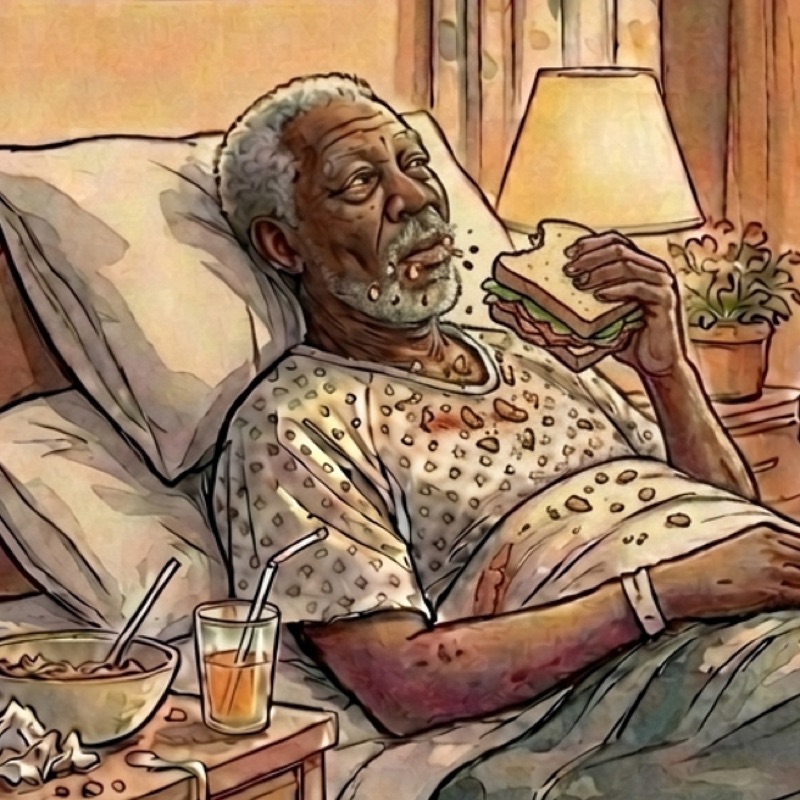
Prevents prolonged dying where other living wills cannot be effective
Only My Way Cards offer a way to reduce suffering when you can still eat and drink on your own — so you are not forced to wait months to years of prolonged suffering — until you need assistance that can then be stopped.
Half a million to a million Americans are trapped in a stage where they can still eat and drink — so their "dementia-specific" living will cannot be effective. (If you don't need assisted feeding, then "stopping assistance" cannot reduce how long you suffer.) As of April, 2026, only one living will addresses this "Dementia Gap": the My Way Cards.
How one person used her own words to describe Condition 1:
Your voice is the most compelling evidence of your wishes.
MyVoiceLivingWill™ requires no pen, no paper, no additional clicks, and no typing. Just record on audio or video the intensity of suffering you judge for each condition and securely send us the file.
Speak your name, your date of birth, and your judgments into any device. Your voice captures not just what you decided — but your explanation why. That reasoning provides compelling, undeniable evidence of your intent and significantly strengthens your directive's enforceability.
Experience has shown that while the SELF-GUIDED method works, if there are funds or insurance to be interviewed by a trained Strategic Advance Care Planning Counselor, you will likely complete a more convincing set of reasons. Many people who had counseling for all 36 conditions were grateful for the help they received. Several felt counselors helped them enhance their understanding of their own lifelong values and judge intensity of suffering of conditions so they aligned more accurately on a second or third run through than they did, on the first.
Contact Dr. Terman to BeginI think that what you, Dr. Terman, have created is incredibly valuable and amazing. I can't imagine other possible conditions that the 'me' I am now would want to judge or make a decision about.Martin — after completing 36 My Way Cards, March 2026
Does your dementia-specific living will protect you from these three common failures?
WARNING: Check Your Dementia-Specific Living Will For (A) Omitting Major Sources Of Suffering And (B) Being Ineffective
Almost all other dementia-specific living wills have no solution for two problems:
- (A) Not asking for your voice — these living wills do not let you explicitly express your desire to avoid specific sources of non-observable suffering (N-O-S).
- (B) Ineffective due to the Dementia Gap — when dementia patients can still eat and drink without others' assistance while their suffering is severe, these living wills offer no way to reduce how long you will suffer.
WARNING: Check Your Dementia-Specific Living Will For (C) — a Tragic Error
Is your dementia-specific living will like almost all others? Does it assume that as soon as you cannot RECOGNIZE your family, you also cannot ENJOY them? That assumption can be tragic — some patients cannot recognize their family but can still enjoy "these nice people who seem to like me."
Never use a living will that has only one condition for being unable to recognize family and close friends. That's the only way to make sure you do not die too soon — prematurely — months before you'd want.
About Us
Caring Advocates is a 501(c)(3) nonprofit founded in 2000 to help patients and families navigate end-of-life decisions with clarity, dignity, and persuasive documentation that future physicians will honor.
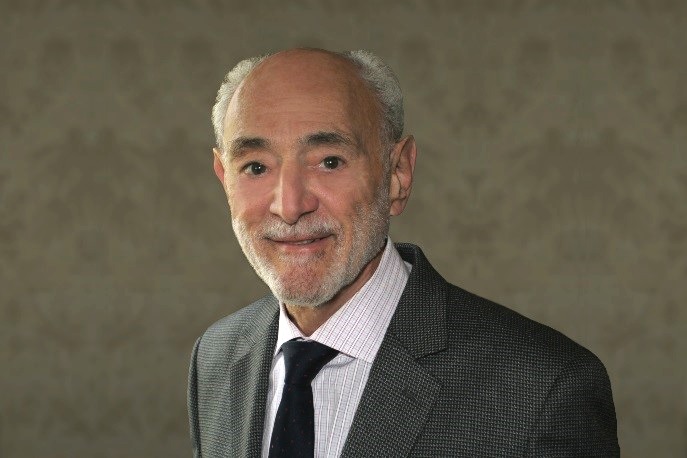
Stanley A. Terman, PhD, MD
Stanley A. Terman’s psychiatric career is dedicated to empowering people to make informed decisions so they can successfully navigate life’s challenges with more pleasure, less suffering, and stronger relationships. He views life as a journey that includes major transitions, some of which are quite challenging. After fifty years, he still passionately enjoys practicing a combination of existential, Buddhist, cognitive, and strategic psychotherapies — reserving psychiatric medications for only when truly needed.
In 2000, Dr. Terman founded the non-profit organization Caring Advocates, which he still leads. He has published several books and articles on end-of-life planning and ethics, including The Best Way to Say Goodbye, the medical thriller Lethal Choice, and Peaceful Transitions. In 2009, he created an illustrated patient decision aid that generates a living will for all terminal illnesses, with special focus on the challenges of advanced dementia. These “My Way Cards” constitute a patient decision aid that generates the “Natural Dying Living Will” — one of four documents that planning patients complete in “Strategic Advance Care Planning.” The Canadian version includes the country-wide option for Medical Aid in Dying for current decisions, and the new option to complete an Advance MAiD Request for dementia that is currently available only in Quebec. He also developed a protocol called “Now Care Planning” that helps reduce the suffering of patients who reached advanced dementia without indicating their end-of-life wishes. It relies on a Patient Decision Committee whose members’ role is to express the decisions they believe the patient would have made in their current condition.
Three recent innovations:
- High-resolution color graphic illustrations reveal the emotions that people experience in late-stage dementia and other terminal conditions. Spoken and word bubbles show the significant contributions from non-observable sources of suffering.
- Planning patients can now use MyVoiceLivingWill™, an AI-assisted program, to judge the intensity of their suffering (JIS) or decide on a treatment type (DOTT) based on their personal values — in their own voice.
- Dr. Terman’s most recently accepted article delineates a new substage of dementia, proposes a novel treatment for its otherwise-irreducible suffering, and argues why even religious conservatives can view that treatment of last resort — ‘Moderate Anesthesia’ — as morally justified.
Dr. Terman received his AB from Brown University, his PhD from MIT, and his MD from the University of Iowa. He has been board-certified in psychiatry since 1980. Before entering private practice and becoming a bioethicist by publishing and teaching, he was assistant professor of psychiatry at the University of California, Irvine.
He enjoys living in Sausalito. From his condo, he can view three islands: Angel, Alcatraz, and Treasure. His favorite pastime is hiking hills in Marin Headlands.
Dr. Terman plans to retire when he reaches the age of 95.
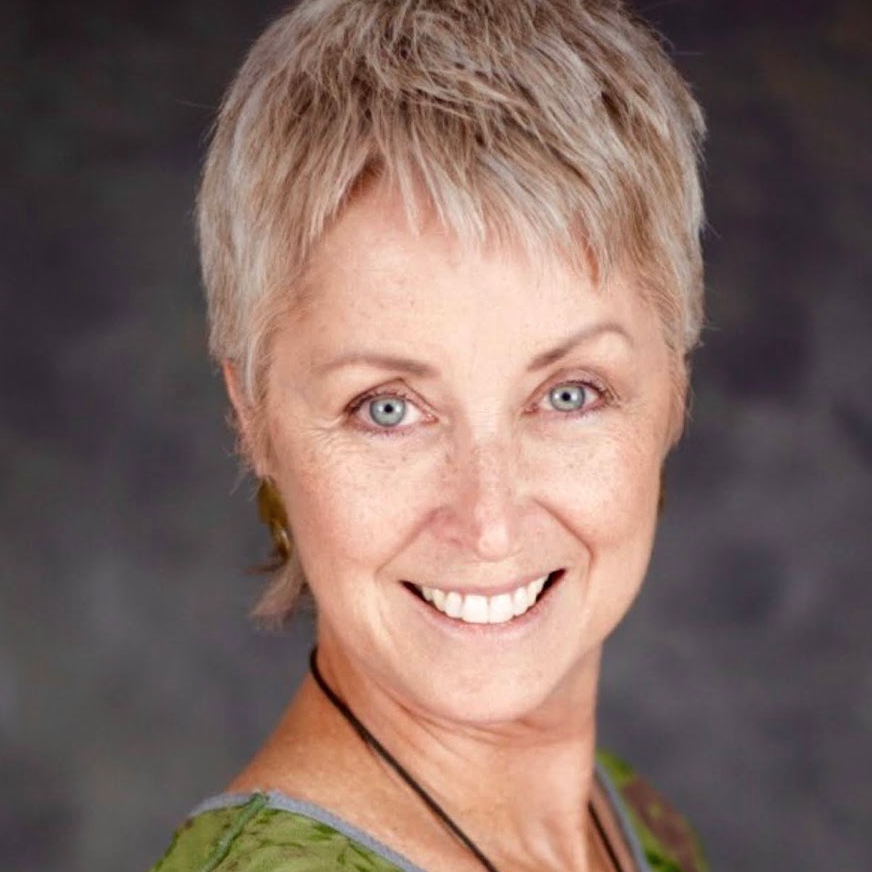
Trina Wacasey, Ph.D.
Trina Wacasey has a PhD in Human Resource Development from Texas A&M University. She is an End-of-Life Doula, Guide, and Consumer Advocate. She founded Creating Honoring Spaces in 2019. Dr. Wacasey has deep roots and connections in California. She is now expanding her practice nationwide by traveling to patients requesting her services. She partners with hospice teams and families to provide compassionate guidance through the entire path of navigating current or future serious illnesses and their available end-of-life options. She bridges practical planning with emotional support, helping individuals and families make some of life’s hardest decisions with greater clarity, autonomy, and peace.
At Caring Advocates, Dr. Wacasey works alongside Dr. Terman to guide patients and families through the Strategic Advance Care Planning arc — from the first Free Trial that generates a “demonstration” Natural Dying Living Will using MyVoiceLivingWill™, to the final comprehensive document covering all 36 conditions.
Importantly, she is present as life’s last chapter unfolds for a multitude of tasks that make the experience timely, peaceful, and meaningful.
Watch Dr. Terman
Three decades of psychiatric and bioethics work on end-of-life choices — in his own voice. Each video opens on YouTube.
What motivates the work after three decades in end-of-life psychiatry — and why he keeps coming back to advanced dementia.
Why VSED (voluntarily stopping eating and drinking) is the conventional path our medical culture has forgotten — and how to use it lawfully.
Stan and dementia patient-advocate Michael Ellenbogen on why MAiD frameworks fail dementia patients — and what the alternative looks like.
Interview by Dr. Karen Wyatt of End-of-Life University on how a properly designed living will can address the dementia gap that standard directives miss.
Stan walks through his interactive poster on the practical challenges of dementia-specific living wills — what fails, what works, and why.
Over 20 years of improvement
Resources and Documents
Strategic ACP: An Overview
Non-Observable Suffering explained. Why 2M+ Americans need this. The problem in plain language.
Download PDFMy Way Cards — 9 Conditions
Reveals and solves the most common error most other dementia-specific living wills make. Don’t die before you want. Add the 36th My Way Card you need so your dying can be timely.
Sign up to receive the Free TrialSeven Steps to Strategic ACP
Provides details about the entire protocol's striving to honor your end-of-life wishes — from judging/deciding for each condition, to consenting by signing Future POLSTs, to several options for storing all your videos and documents.
Download PDFNow Care Planning — 6 Steps
When it's too late for the patient to speak for himself or herself. A protocol for families whose loved one has already lost decision-making capacity.
Download PDFDementia & Your End-of-Life Options
Dr. Terman's comprehensive Colorado presentation.
View PresentationWhat You'll Complete with the full Strategic Advance Care Planning Protocol
Natural Dying Living Will, Bilateral durable power of attorney for healthcare decisions, Natural Dying Agreement, and Future POLST forms.
PreviewThe Last Chapter
How long, and how much…
Will your suffering from Alzheimer's — or another terminal disease — be severe?
Will your loved ones' burdens be huge?
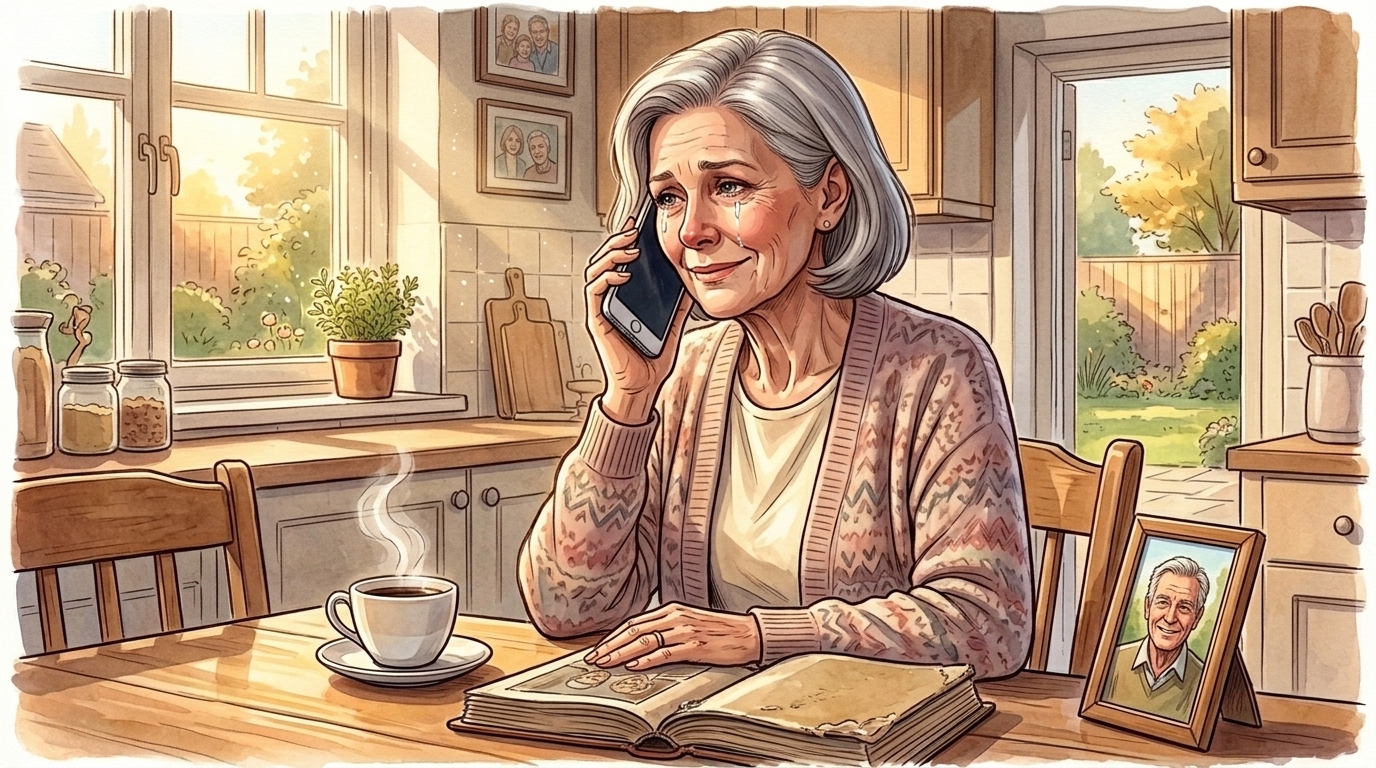
Caring Advocates, led by Dr. Stan Terman and his colleagues, did their part: over 20 years of improving the technology and arguing the bioethics, incorporating attorneys' opinions.
The protocol — Strategic Advance Care Planning — is ready.
The only part still missing is you — your commitment to begin, now.
Forty-two percent of Americans over 55 will develop dementia. None of us know if we will be among them. But we can act now — use our still-working minds to record our voice, explain our values, and judge the suffering of each future condition.
Someday, the opportunity to complete this task will no longer be possible.
Plan now — while your mind still works — then live as long and as well as you can.
Text 760-704-7524Prefer to talk? Call 800-64-PEACE · email DrTerman@CaringAdvocates.org · free consultation